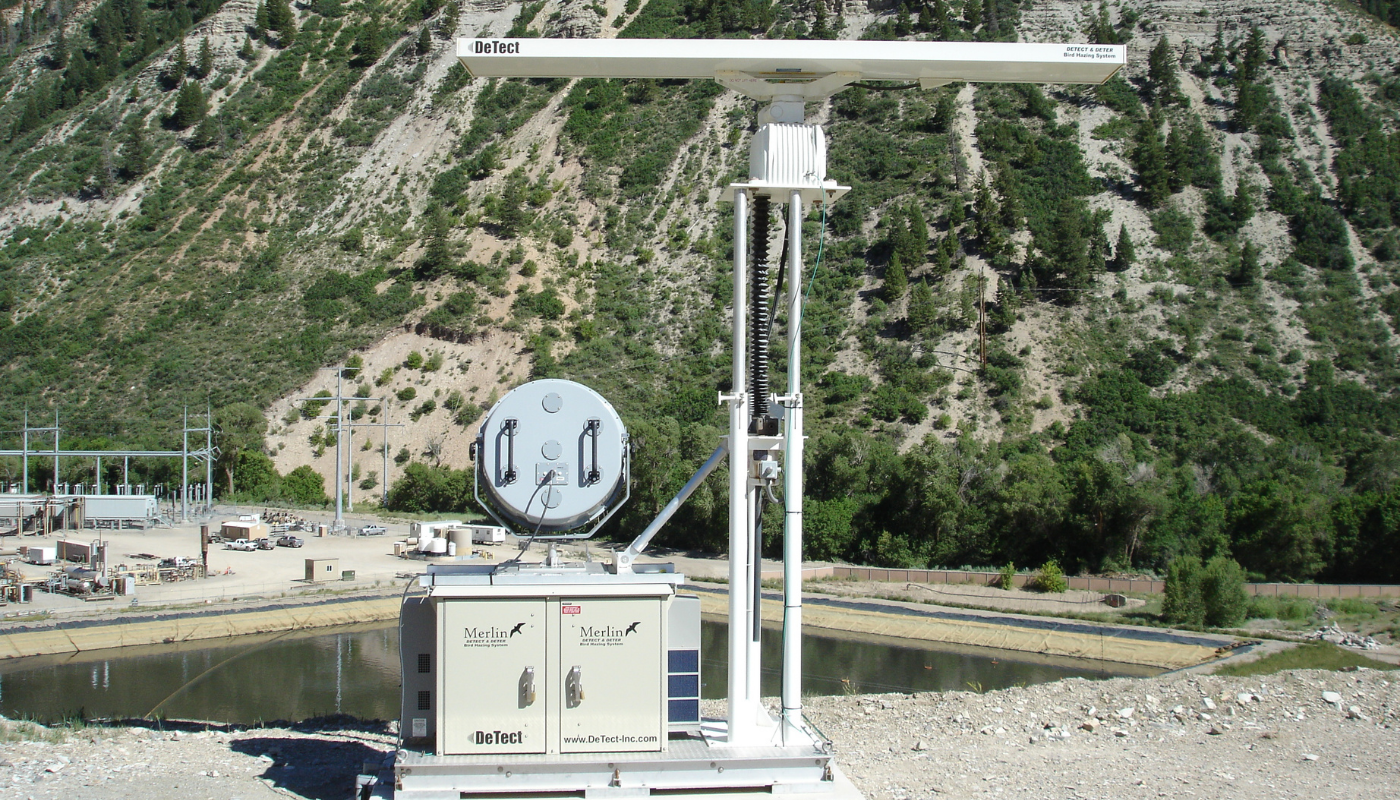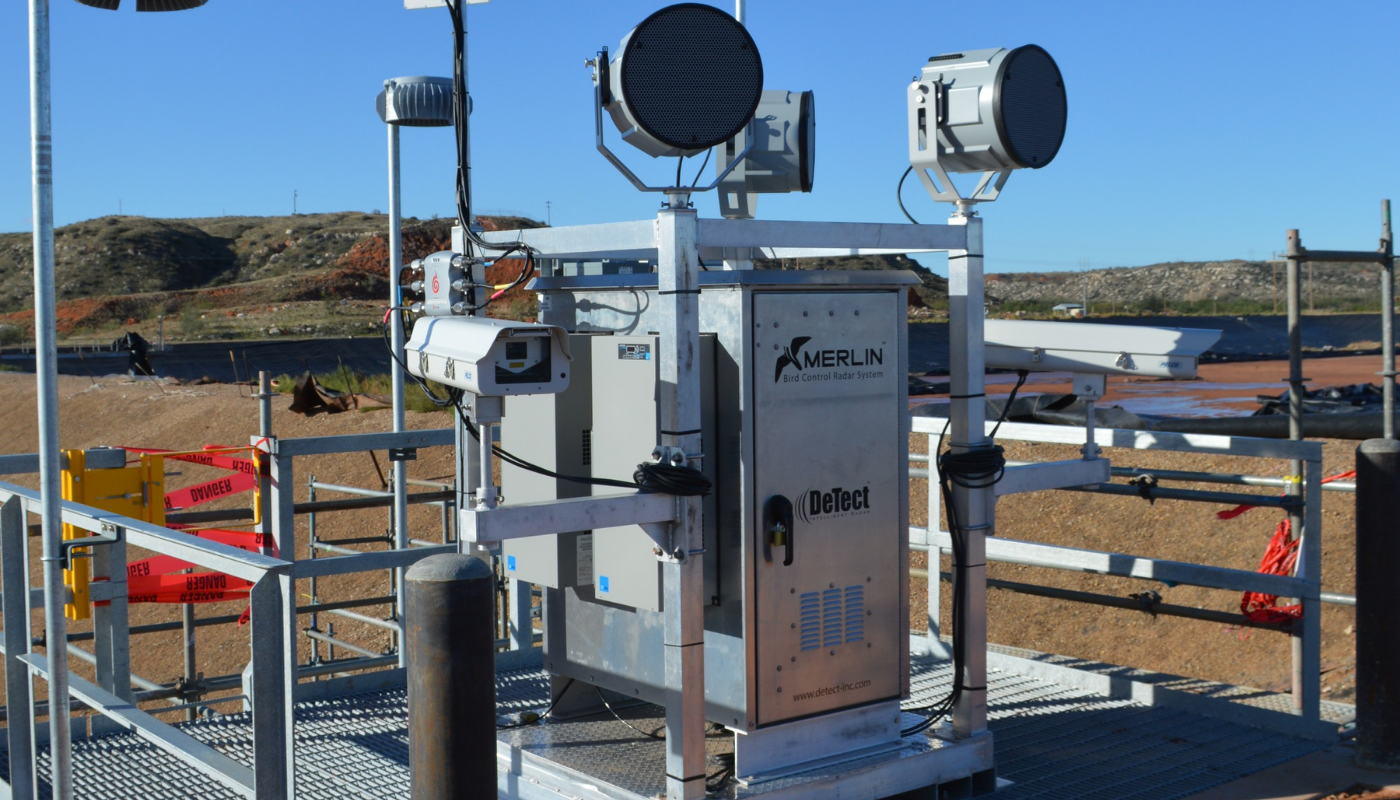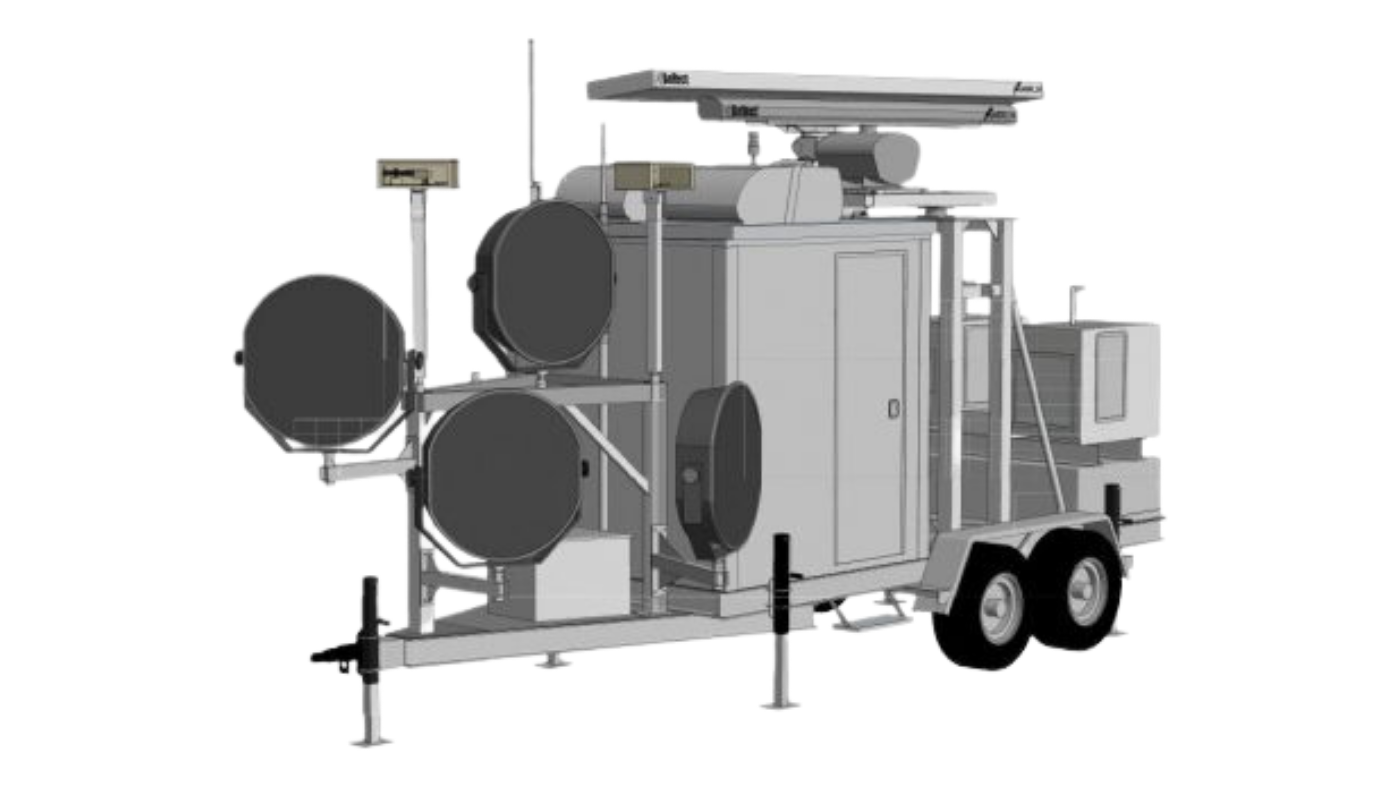



MERLIN Detection and Deterrence Bird Control Radar System continuously monitors user-defined bird and wildlife control zones and automatically activates bird-deterrent devices to prevent birds from entering restricted areas. It is one of the most advanced and proven radar systems of its kind.
In 2012, the Canadian Association of Petroleum Producers (CAPP) presented the Responsible Canadian Energy Award based on DeTect technology’s successful track record in protecting birds at oil sands facilities in Northern Alberta. In its press release, CAPP stated that the installed MERLIN system was more than 97.5% effective in deterring birds approaching oil-contaminated pond areas during 2010 and 2011, and that no bird deaths occurred.
MERLIN Detection and Deterrence is based on DeTect’s proven MERLIN Avian Radar System technology. It is used by the U.S. Air Force, NASA, and airports worldwide to detect and monitor hazardous bird activity for bird-aircraft strike hazard management at air bases. MERLIN detection and deterrence applications include industrial waste ponds, oil and gas drilling pits, landfills, stormwater retention ponds, agricultural areas, and other sites requiring high-performance, reliable, automated 24/7 bird control and protection.
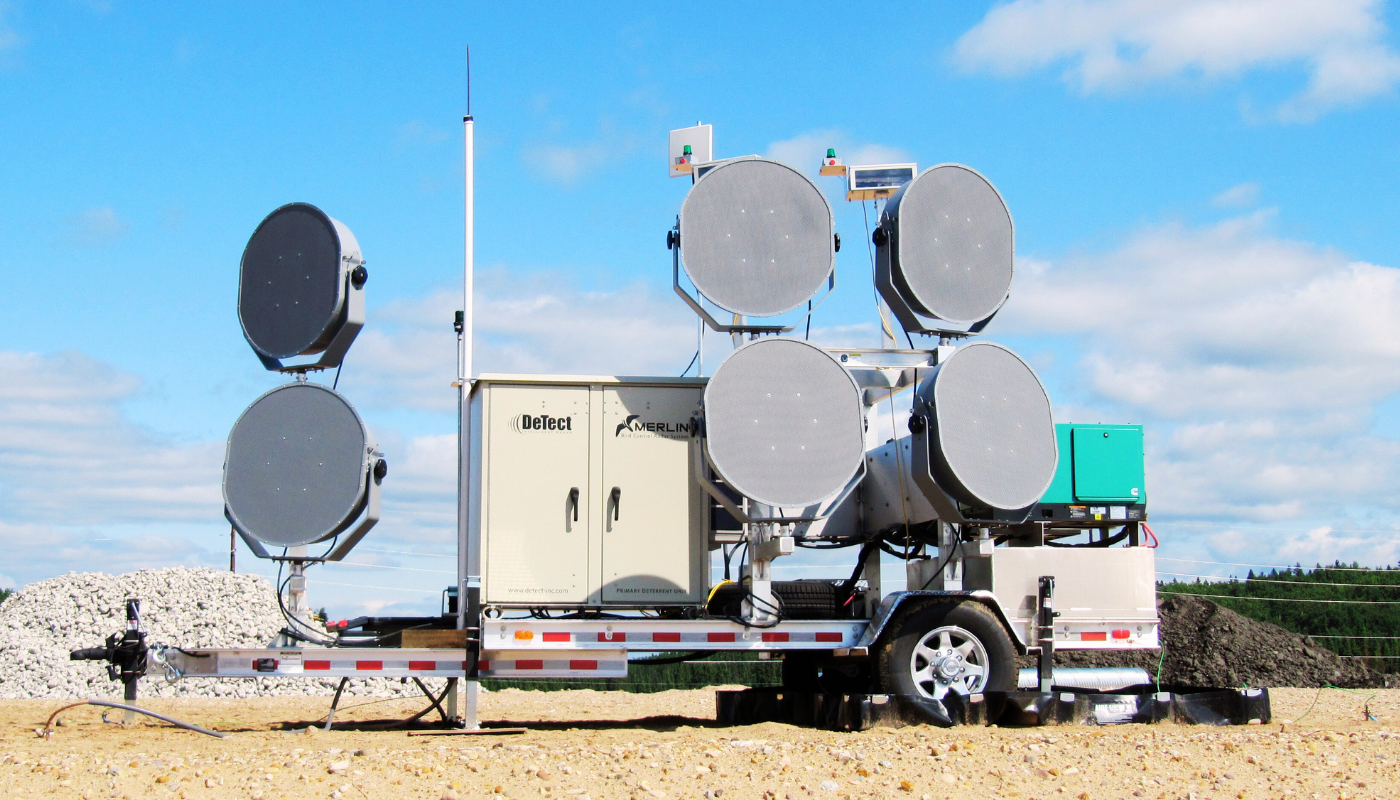
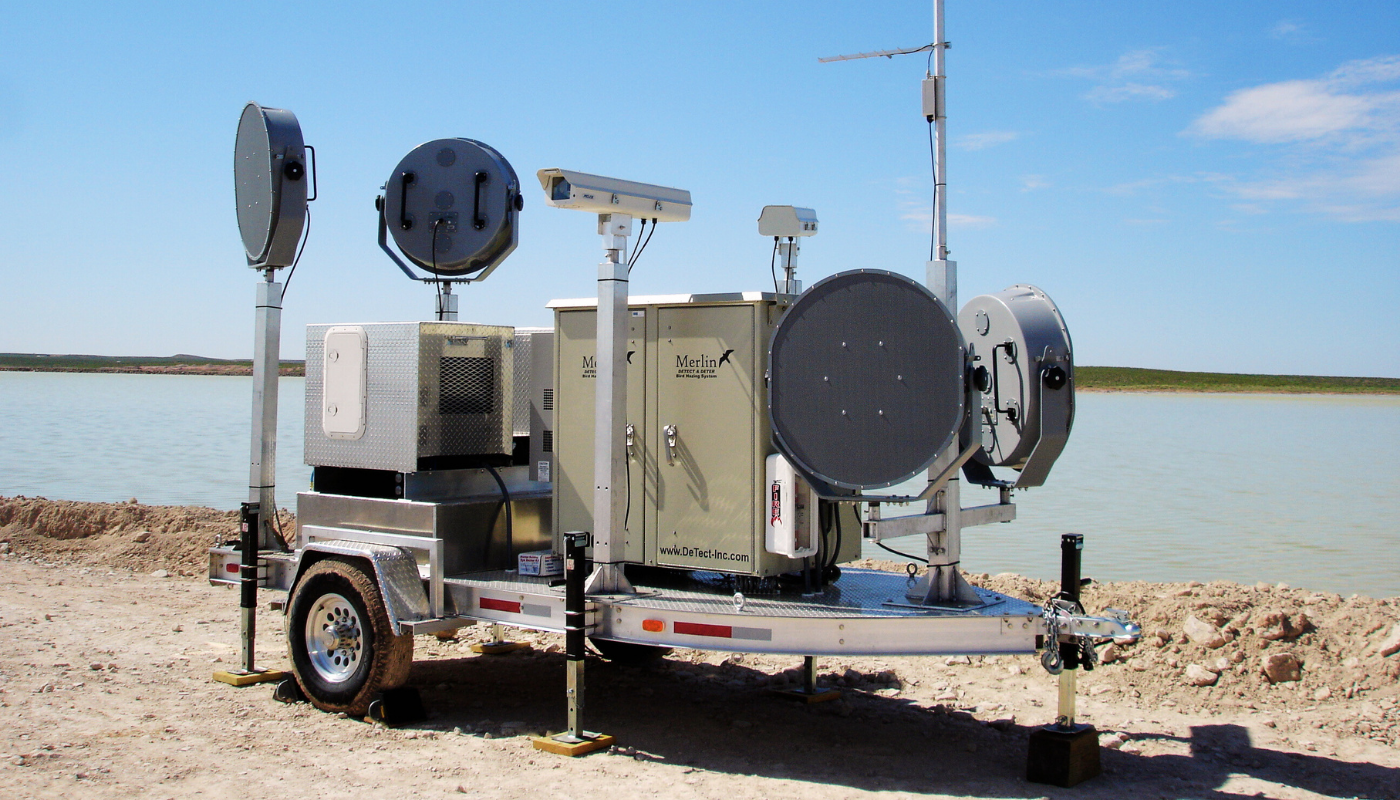
The technology allows multiple zoned control areas to be customized within MERLIN software, and any bird target entering a control zone triggers the activation of deterrent devices. The system can be supplied as fully self-powered fixed, relocatable, floating, or mobile units. For complete zoned coverage of large areas, multi-unit networks consisting of primary radar units, Primary Deterrent Units (PDU), Secondary Deterrent Units (SDU), and/or Floating Deterrent Units (FDU) can be deployed.
The system can interface with a wide range of non-lethal bird-deterrent devices, including conventional environmental bioacoustic devices and propane cannons. It can also be integrated with systems such as DeTect’s proprietary programmable Sweeping Bird Control Laser deterrent system and Long Range Bioacoustic Units (LRBU).